- RFS Consulting Newsletter
- Posts
- RFS DeFi Risk Intelligence Weekly
RFS DeFi Risk Intelligence Weekly
November 21, 2025 | Institutional Digital Asset & DeFi Risk Insights

Camryn Odom & Robert Franklin III
November 21, 2025 • Estimated Reading Time: 9 minutes
In partnership with

Published by RFS Consulting — Advancing Institutional DeFi Risk Intelligence
In Partnership with Onchain Foundation & Gemach DAO

Welcome to Another Edition of RFS DeFi Risk Intelligence Weekly! — Week of November 17–21, 2025
Here’s whats new this week:

🗞️ Enjoying RFS DeFi Risk Intelligence Weekly? Learn How You Can Support Us!
“Independent DeFi risk research takes time and resources. If you enjoy our insights, consider fueling the work with a small contribution below”
☕️ Buy Me a Coffee — Fuel future newsletters!
💸 Tip in USDC: Ethereum 0x695B71a929A21F2A260f61aEd09872DA053Bcc42 — secured via Gnosis Safe
💳 Tip via Stripe — One-time or recurring support.
📰 Market Overview — Macro & Liquidity Conditions
RFS’s narrative strength continues to build:
The release of The Blueprint aligns perfectly with current policy momentum.
Law firms, regulators, and allocators are increasingly seeking a unified lens combining risk governance, stablecoin analytics, and regulatory intelligence.
The BMA Embedded Supervision pilot gives RFS a credibility moat that is unmatched in the market.
The joint RFS | Onchain policy research series expands your thought leadership footprint across academia, government, and institutional finance.
RFS Consulting is moving into a category-defining position.
📈 Key Digital Asset Movements
Bitcoin (BTC)
Trading in a low-volatility consolidation band — typically a precursor to major directional moves.
Spot ETF inflows remain consistently positive, reinforcing steady institutional accumulation.
On-chain metrics show strong long-term holder conviction and normalized futures leverage.

Ethereum (ETH)
Outperforming market beta as upcoming EIPs improve fee dynamics and network efficiency.
L2 fee compression is driving higher user activity and stronger L1 settlement demand.
Staking participation continues climbing, tightening circulating supply and improving network security.
Solana (SOL)
Maintains one of the highest user-activity profiles relative to market cap across major chains.
Recent infrastructure upgrades (localized fee markets, QUIC improvements) strengthen throughput and reliability.
Despite elevated volatility, liquidity depth and builder momentum remain solid heading into 2025.
🏛️ Policy & Regulation — Institutional Tailwinds
The regulatory landscape is no longer drifting toward clarity—it’s accelerating.
The Financial Innovation and Technology for the 21st Century Act (FIT21), the GENIUS Act, and the Clarity for Payment Stablecoins Act now form the most comprehensive legislative foundation U.S. institutions have ever had for entering the digital asset arena. Together, these frameworks mark a decisive shift from fragmented oversight to a structured, multi-tier regulatory environment designed to support large-scale participation without stifling innovation.
At the core of these reforms are three themes reshaping institutional strategy. First, a clearer digital commodity vs. security classification gives asset managers and corporate treasurers a workable compliance playbook, reducing the ambiguity that historically kept billions on the sidelines. Second, standardized pathways for exchange, broker-dealer, and issuer registration provide operational predictability—critical for large financial institutions navigating multi-jurisdictional oversight. Third, the mandates around stablecoin reserve transparency, counterparty risk audits, and liquidity reporting create an institutional-grade foundation for payment stablecoins to function as settlement rails across banks, fintechs, and corporates.

By LAPLACE
The result is a narrative shift that’s as psychological as it is structural. The institutional question has moved from “Should we engage?” to “How do we engage responsibly and at scale?” Regulatory clarity is no longer a promise—it's infrastructure. And that makes 2025 the year strategic entry replaces speculative curiosity.
This is exactly where RFS Consulting is positioned: at the intersection of regulatory intelligence, institutional enablement, and actionable market strategy—helping clients navigate the new clarity with precision.
⚠️ RFS Risk Scoreboard - Week of November 17th
Scale: 1.0 (lowest risk) → 5.0 (highest risk)
Stablecoins Risk
This week’s stablecoin risk environment remains broadly stable, but structural divergences between fully reserved, offshore, and RWA-linked issuers continue to define the landscape. Below is the latest RFS outlook across the top settlement assets used in CeFi and DeFi.
Stablecoins | Risk Score | Notes |
|---|---|---|
USDC | 1.4 | Low Risk | Strongest disclosures, clean structure |
USDT | 2.7 | Moderate | Opacity and offshore concentration |
DAI | 2.1 | Moderate | RWA exposure and correlation considerations |
PYUSD | 1.6 | Low Risk | Regulated structure, steady institutional growth |
RFS Breakdown 💬
USDC – USDC continues to anchor the low-risk end of the spectrum, supported by industry-leading disclosures, clean reserve structuring, and U.S.-regulated issuance. Its transparency regime—monthly attestation, granular reserve reporting, and robust banking counterparties—keeps operational and redemption risk minimal. Institutional adoption flows remain steady, reinforcing USDC’s position as the preferred compliant settlement rail across both DeFi and enterprise integrations.
USDT – USDT carries a higher structural risk premium due to its historical opacity, concentrated offshore issuance, and limited real-time transparency compared to peers. While liquidity depth remains unmatched—particularly in Asia and emerging markets—USDT’s governance footprint and reserve composition continue to introduce uncertainty. It remains a workhorse of global crypto liquidity, but carries non-trivial counterparty and jurisdictional exposure that institutions must continuously price in.
DAI – DAI’s hybrid model—algorithmic minting backed increasingly by real-world assets—creates a mixed risk profile. While Maker’s USDC-heavy and RWA-driven backing has stabilized DAI’s peg dynamics, it introduces correlation risks tied to U.S. Treasury markets, issuer concentration, and Maker’s own governance decisions. DAI remains one of DeFi’s most important primitives, but users should monitor RWA allocation, stability module parameters, and governance proposals closely.
PYUSD — PYUSD continues to strengthen its position as a regulated, institution-friendly stablecoin backed by a U.S. trust company. Growth is accelerating—particularly across payment processors and enterprise settlement rails—with a risk profile anchored by clear disclosures and a conservative reserve mix. While DeFi penetration is still ramping, its regulatory structure and corporate backing place it firmly in the low-risk category.
What to Watch Next Week 🗒️
1. Stablecoin Reserve Updates (USDC + PYUSD)
Both issuers are expected to release updated reserve attestations. Any change in Treasury duration, cash allocation, or counterparty exposure will be closely watched as institutional flows pick up into year-end.
2. MakerDAO Governance Cycle
Two major proposals—RWA allocation adjustments and Spark lending rate revisions—are queued for discussion. Either could shift DAI’s collateral profile and yield environment.
3. USDT Liquidity Diagnostics
Monitor offshore exchange flows and Curve liquidity depth. Any signs of imbalance between USDT/USDC pools tend to signal broader risk sentiment changes in Asia-facing markets.
4. Payment Stablecoin Regulatory Messaging
U.S. Treasury and key House committees are expected to provide updates on GENIUS Act implementation timelines. Even small signaling shifts can influence institutional roadmaps heading into Q1 2026.
Protocols Risk
This week’s protocol risk landscape reflects a mix of mature, well-governed platforms and higher-risk, high-activity ecosystems. Understanding structural, governance, and liquidity dynamics remains critical for navigating DeFi exposure responsibly.
Protocols | Risk Score | Notes |
|---|---|---|
Aave | 1.9 | Low Risk | Mature governance and diversified collateral |
MakerDAO | 2.4| Moderate | Centralized governance + RWA concentration |
Uniswap v4 | 2.0| Moderate | Liquidity fragmentation risk |
Solana DeFi (aggregate) | 2.6 | Moderate | High activity, elevated volatility risk |
RFS Breakdown 💬
Aave – Aave maintains a low-risk profile supported by mature governance, broad collateral diversification, and a proven track record of liquidity management. Recent protocol upgrades continue to optimize capital efficiency without materially increasing risk exposure.
MakerDAO – MakerDAO’s moderate risk stems from centralized governance influence and growing real-world asset (RWA) concentration. While RWAs add diversification and yield potential, they introduce new operational and correlation risks, making governance decisions critical for peg stability.
Uniswap v4 – Uniswap v4 remains relatively low-risk from a governance perspective, but liquidity fragmentation across concentrated liquidity pools and multiple fee tiers introduces execution and slippage considerations, particularly during high-volatility periods.
Solana DeFi (Aggregate) — The Solana ecosystem exhibits robust activity and strong developer engagement, but elevated volatility and network-level risk increase the overall profile. High throughput and on-chain engagement are positives, yet traders and LPs must manage potential liquidation cascades and sudden liquidity shifts.
Forward-Looking Commentary 🌅
Governance & Collateral Monitoring: MakerDAO and Aave remain in focus for protocol-level decision-making that could shift risk profiles materially.
Liquidity Dynamics: Uniswap v4 users should watch concentrated liquidity pools and multi-tier AMM structures for potential inefficiencies.
Network Activity Risk: Solana’s DeFi aggregate score underscores that high-velocity ecosystems can be both opportunity and risk — monitoring volatility, throughput, and liquidity depth is essential.
Takeaway 💬
While mature protocols like Aave and Uniswap v4 continue to offer relatively predictable exposure, platforms with centralized governance or high systemic activity — like MakerDAO and Solana DeFi — require active risk awareness and monitoring.
📆 Institutional Themes of the Week
1. Stablecoins are becoming the new institutional cash rail
Treasurers, private credit funds, and fintechs are increasingly exploring GENIUS-aligned stablecoin integrations for cross-border payments, intraday liquidity, and treasury diversification.

By PYMNTS.com
2. Embedded Supervision is moving from concept to practice
With RFS advancing in the BMA Innovation Hub and Chainlink/Apex showcasing parallel regulatory infrastructure, the industry is converging on a future where:
Regulators monitor risk in real time
Institutions rely on automated dashboards
Compliance is embedded into transactions
RFS’s integrated approach is now the standard others are benchmarking against.

By BMA.bm
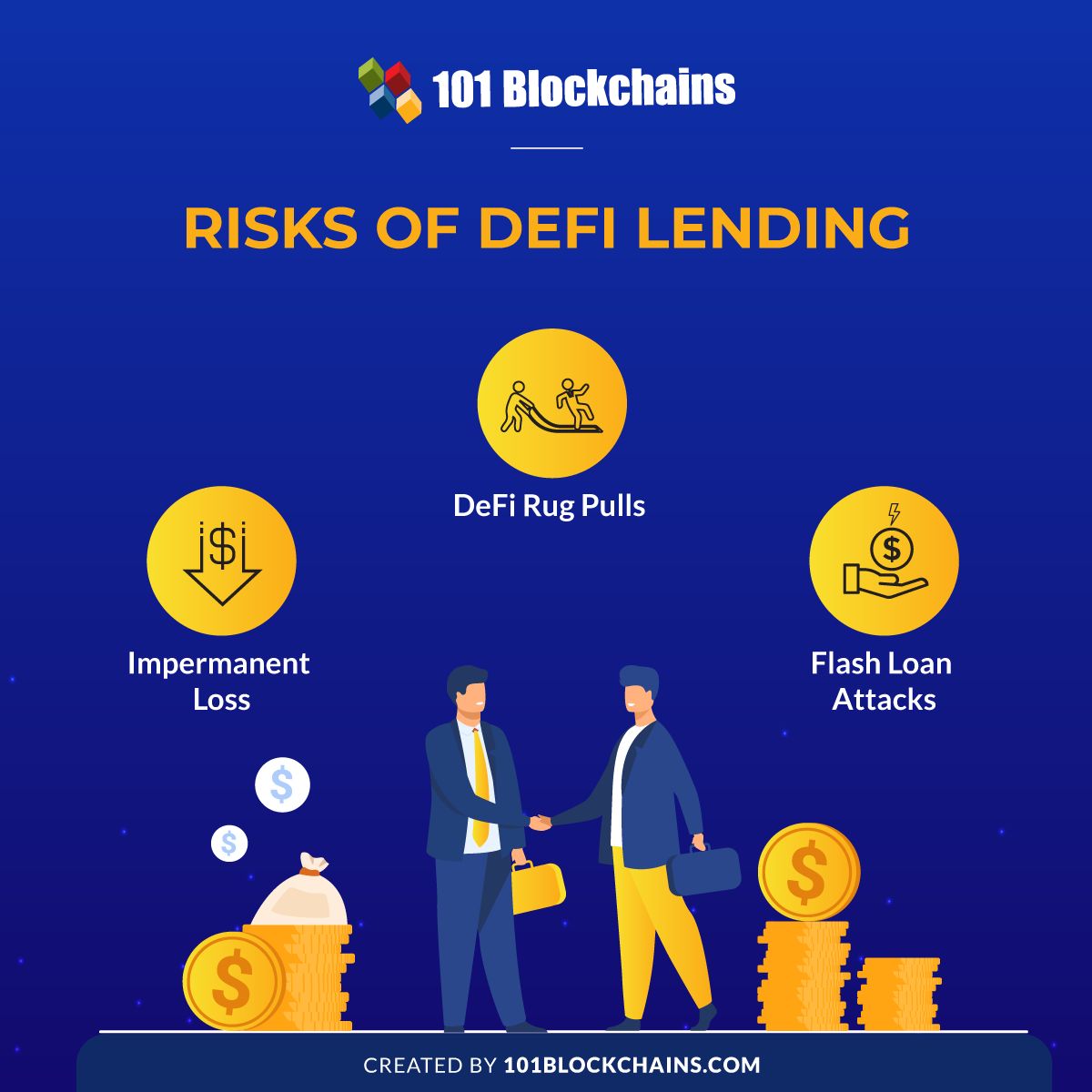
3. DeFi lending is entering a risk-conscious reset
Allocators are demanding clearer collateral chains, onchain reserve visibility, and multi-venue liquidity assessment.
This directly elevates demand for the RFS Sharpe Ratio Module and Liquidity Density Function.
By 101 Blockchain
🧠 Onchain Intelligence — Signals & Flows
Stablecoins
After a period of relative stagnation, stablecoin supply resumed expansion, driven primarily by USDC. This growth signals that demand for compliant, institution-friendly rails remains strong, particularly as corporate treasuries and professional investors continue to deploy capital on-chain. The uptick in supply also supports DeFi liquidity pools, lending protocols, and cross-chain operations, reinforcing USDC’s position as the backbone of the stablecoin ecosystem. Monitoring issuance velocity and reserve compositions will be key to understanding broader market stability.
Ethereum Layer 2s
Ethereum’s Layer 2 networks are seeing increased on-chain activity, translating into lower L2 fees and improved validator economics. Higher throughput and reduced congestion on L1 are creating a positive feedback loop: users experience lower costs, while validators and stakers benefit from stronger participation and transaction fees. These developments are not only improving the UX for retail and institutional participants but also positioning Ethereum to maintain competitive advantage against rival L1 networks as adoption grows.
Real-World Assets (RWAs)
Issuance of RWAs continues at a robust pace, with treasuries maintaining dominance over private credit as collateral for DeFi lending. The expansion of RWA-backed protocols highlights the growing intersection between traditional finance and blockchain, offering new yield avenues while also introducing operational, regulatory, and correlation considerations. Institutional participants are increasingly comfortable leveraging RWAs, reinforcing DeFi’s evolution from crypto-native liquidity to diversified financial infrastructure.
Options & Hedging Activity
Derivative markets are signaling caution, with increased options hedging activity suggesting that market participants anticipate elevated year-end volatility. Both retail and institutional players are positioning for potential directional swings, emphasizing the importance of risk management tools and multi-layered hedging strategies. On-chain data confirms rising interest in protective structures, particularly around high-beta tokens like ETH and SOL, as traders prepare for macro and protocol-level catalysts.
The Smartest Free Crypto Event You’ll Join This Year

Curious about crypto but still feeling stuck scrolling endless threads? People who get in early aren’t just lucky—they understand the why, when, and how of crypto.
Join our free 3‑day virtual summit and meet the crypto experts who can help you build out your portfolio. You’ll walk away with smart, actionable insights from analysts, developers, and seasoned crypto investors who’ve created fortunes using smart strategies and deep research.
No hype. No FOMO. Just the clear steps you need to move from intrigued to informed about crypto.
🦾 RFS Consulting — Positioning for Institutional Demand
RFS’s narrative strength continues to build:
The release of The Blueprint aligns perfectly with current policy momentum.
Law firms, regulators, and allocators are increasingly seeking a unified lens combining risk governance, stablecoin analytics, and regulatory intelligence.
The BMA Embedded Supervision pilot gives RFS a credibility moat that is unmatched in the market.
The joint RFS | Onchain policy research series expands your thought leadership footprint across academia, government, and institutional finance.
RFS Consulting is moving into a category-defining position.

⚠️ Featured White Paper: Benchmarking DeFi Risk
“Stablecoin Liquidity Risk Management: A Regulatory Intelligence Framework for Institutional DeFi.”
Author: RFS Consulting | Strategic Partner: Onchain Foundation
This new white paper outlines a standardized methodology for assessing and scoring DeFi protocol risk, covering:
Liquidity depth and stability metrics
Smart contract assurance layers
Collateralization frameworks
Counterparty and operational risk mapping
Regulatory alignment considerations
🔗 Read or Download the Full White Paper Below:

Inside This Edition
Designed for regulators, law firms, treasuries, and institutional investors.
Supports the RFS DeFi Risk Intelligence Dashboard framework.
Built on live data pipelines and protocol scoring models.
Why It Matters — As Treasury’s forthcoming rule making begins shaping the stablecoin landscape, liquidity and disclosure analytics will become core to institutional risk governance.
🙇🏾♀️ Camryn’s Corner
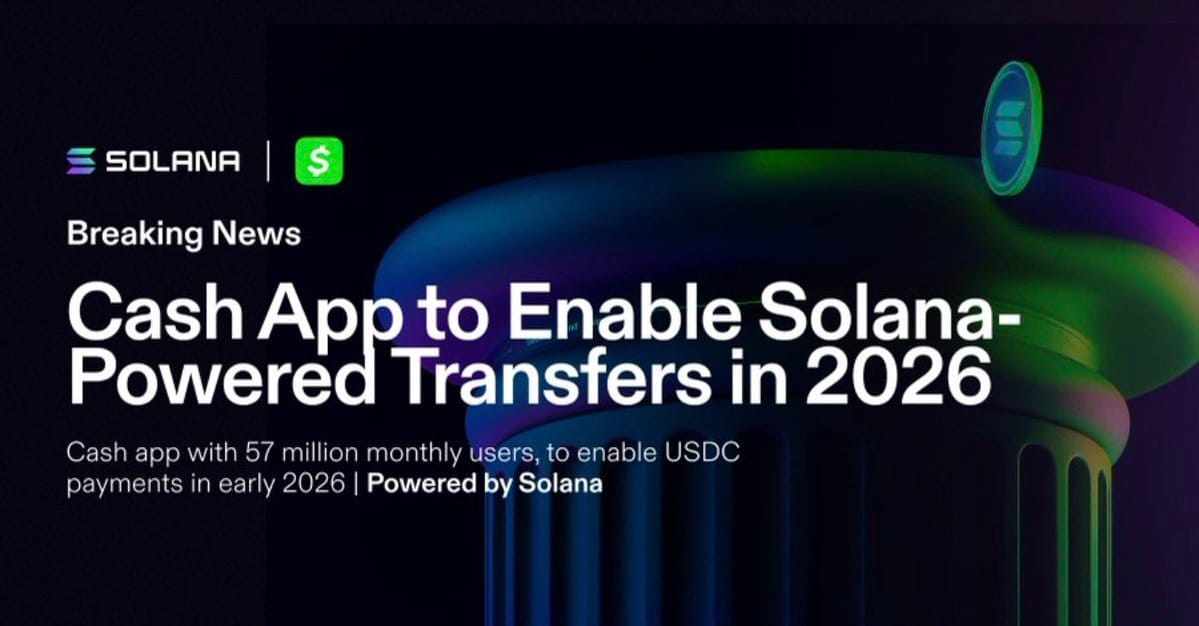
Welcome back to another edition of Camryn’s Corner, your weekly highlight reel of standout protocols, applications, and news shaping the DeFi world. This week, we’re spotlighting Solana as it makes waves across both retail and institutional adoption, from USDC payments via Cash App to staking-enabled SOL ETFs, signaling a new phase of network growth and capital flow into DeFi.
“Solana is making moves on all fronts: from everyday USDC payments via Cash App to institutional staking through Fidelity, the network is bridging mainstream and professional adoption.”
The Solana ecosystem is capturing attention this week as new developments hint at both mainstream adoption and institutional engagement. Community sources indicate that Cash App may enable USDC payments via Solana as early as early 2026, opening the door for everyday users to transact directly on a high-throughput blockchain. At the same time, Fidelity is reportedly launching a staking-enabled SOL ETF, signaling growing institutional appetite for both exposure and network participation. Together, these moves underscore that Solana is no longer just a developer playground but is positioning itself as a bridge between traditional finance and the on-chain economy.
By Solana
From a DeFi perspective, the implications are significant. Payment rails on Solana could dramatically increase on-chain activity, boosting liquidity in lending, DEXs, and staking markets. More users transacting via USDC on Solana also strengthens the network effect, potentially improving fee economics and validator rewards. On the institutional side, Fidelity’s staking-enabled ETF introduces predictable capital flows, which could influence staking yields, network security, and liquidity provisioning across SOL-based DeFi protocols.
Looking forward, the key question is how Solana’s ecosystem will balance growth with stability. Increased retail adoption via Cash App could drive volume and engagement, but also introduce volatility and operational strain during periods of heavy network usage. Meanwhile, institutional capital through staking ETFs could bring more predictable inflows but may concentrate voting and governance influence. For DeFi users and investors, staying attuned to how these mainstream and institutional vectors interact will be essential for understanding potential yield, liquidity, and risk dynamics as Solana moves into 2026.
📝 Closing Perspective
Institutions are no longer debating digital assets.
They are preparing to operationalize them.
In this environment, risk management isn’t a back-office function —
it is the competitive edge of modern finance.
RFS Consulting continues to define the standard for how institutions engage with DeFi, stablecoins, and tokenized assets with confidence, compliance, and clarity
🫱🏽🫲🏿 Support RFS Risk Intelligence Weekly
If you enjoy our weekly research and want to support continued independent risk analysis, consider:

Gif by xbox on Giphy
☕️ Buy Me a Coffee — Fuel future newsletters!
💸 Tip in USDC: Ethereum 0x695B71a929A21F2A260f61aEd09872DA053Bcc42 — secured via Gnosis Safe
💳 Tip via Stripe — One-time or recurring support.
📢 Call to Action
Interested in joining the pilot or accessing our full whitepaper? — Email [email protected] (Subject: Pilot Enrollment Request)
💼 Custom engagements | Audit-aligned scoring | Institutional onboarding
🛜 Join Our Community — Let’s Get to 500 Subscribers!
Be part of the RFS DeFi Risk Intelligence Network — our goal is to build a vibrant global community of 500+ institutional readers, builders, and compliance professionals advancing responsible DeFi.
Don’t Forget to Follow and Engage with Us:
🌐 RFS Consulting Website: www.rfsconsultingglobal.com
🎥 RFS YouTube Page: @RFSConsultancy_DeFiAdvisory
🔗 RFS Consulting LinkedIn Page: @rfsconsultingglobal
🐦 X / Twitter: @RFSCryptoDeFi
🖇️ Stay Connected
For partnership or media inquiries: [email protected]
Subscribe to the RFS DeFi Risk Intelligence Weekly
Till next time,
RFS DeFi Risk Intelligence Weekly
🔓Disclaimer: This Weekly is strictly informational—not investment or legal advice. RFS Consulting emphasizes governance, model validation, and data integrity in its risk assessment framework.