- RFS Consulting Newsletter
- Posts
- RFS DeFi Risk Intelligence Weekly
RFS DeFi Risk Intelligence Weekly
January 9th, 2026 | Institutional Risk, Stablecoins, Liquidity & Onchain Signals


Camryn Odom & Robert Franklin III
January 09, 2026 • Estimated Reading Time: 5 minutes
Week of January 5th - January 9th
Prepared by RFS Consulting LLC — Advancing Institutional DeFi Risk Intelligence
In Partnership with Gemach DAO

Welcome to Another Edition of RFS DeFi Risk Intelligence Weekly!
Your weekly breakdown of institutional digital asset risk, policy momentum, and real-time DeFi intelligence tailored for allocators, regulators, and enterprise leaders.
Here’s whats new this week:

🗞️ Enjoying RFS DeFi Risk Intelligence Weekly? Support the Research!
“Independent DeFi risk research takes time and resources. If you enjoy our insights, consider fueling the work with a small contribution below”
☕️ Buy Me a Coffee — Fuel future newsletters!
💸 Tip in USDC: Ethereum 0x695B71a929A21F2A260f61aEd09872DA053Bcc42 — secured via Gnosis Safe
💳 Tip via Stripe — One-time or recurring support.
📸 Market Snapshot
Digital asset markets entered the new year with compressed volatility but elevated tail risk—a combination that often precedes sharp regime shifts rather than sustained calm. While spot prices across major assets remain relatively stable, underlying market structure tells a more fragile story. For institutions, the dominant risk variable this week is not price discovery, but liquidity quality: where liquidity resides, how quickly it evaporates, and who ultimately bears the cost when it does.

Several forces are shaping this environment. Persistent macro uncertainty continues despite expectations of rate normalization, while institutional exposure to onchain instruments is steadily rising across treasuries, collateral frameworks, and settlement rails. At the same time, scrutiny of stablecoin reserve composition, redemption mechanics, and settlement timing is intensifying among regulators and risk committees alike. This is a market where confidence can evaporate far faster than price—and where liquidity events, not valuation models, will drive outcomes.
🚦Macro & Policy Signals
On the macro front, the Federal Reserve continues to signal flexibility around future rate cuts, yet liquidity conditions remain uneven across global markets. Risk assets may benefit from easing narratives, but liquidity fragmentation—across jurisdictions, balance sheets, and settlement systems—has not meaningfully improved. For digital assets, this disconnect matters: macro easing does not automatically translate into resilient redemption capacity.

Meanwhile, regulatory momentum around payment stablecoins is accelerating globally. Policymakers are moving past innovation-first framing and focusing instead on operational resilience, supervisory visibility, and stress absorption. Across jurisdictions, the same core question is emerging: when redemptions spike, who absorbs liquidity stress—the issuer, intermediaries, or the market itself?
RFS View 💬
Macro easing does not eliminate run risk. Historically, easing cycles often increase leverage, maturity mismatch, and liquidity illusion—amplifying systemic exposure rather than reducing it. Stablecoin and DeFi risk must be assessed through this lens, not in isolation.
⚠️ Stablecoin Risk Watch
This week reinforced a critical reality that institutions are increasingly internalizing: stablecoins do not fail because of peg drift—they fail because of liquidity mismatch under stress. The appearance of stability in calm markets masks structural vulnerabilities that only surface during redemption surges.
Several patterns stood out. Stablecoins with narrow or discretionary redemption rails remain vulnerable even when reserves appear “high quality” on paper. In practice, secondary market liquidity—DEXs, CEXs, and lending pools—continues to act as the first shock absorber, not the issuer itself. This shifts risk outward, concentrating stress in venues and protocols that were never designed to function as liquidity backstops.

By Jarsking Packaging
Institutional confidence hinges less on reserve headlines and more on the speed, transparency, and predictability of redemptions.
Risk Signal: Stablecoins with opaque settlement waterfalls, discretionary controls, or delayed redemption timelines remain structurally fragile—regardless of market share or brand strength.
📊 DeFi Protocol Risk Update
Protocol-level risk this week was dominated by liquidity concentration and architectural complexity. A growing share of usable liquidity remains clustered in a small number of venues, increasing fragility during correlated withdrawal events. At the same time, the expanding use of custom hooks, composability layers, and modular execution environments is broadening attack surfaces—both technical and economic.
More concerning is the continued lack of extreme scenario stress-testing, particularly around stablecoin-driven liquidity shocks. Many protocols model isolated failures but fail to account for correlated exits across assets, venues, and bridges.
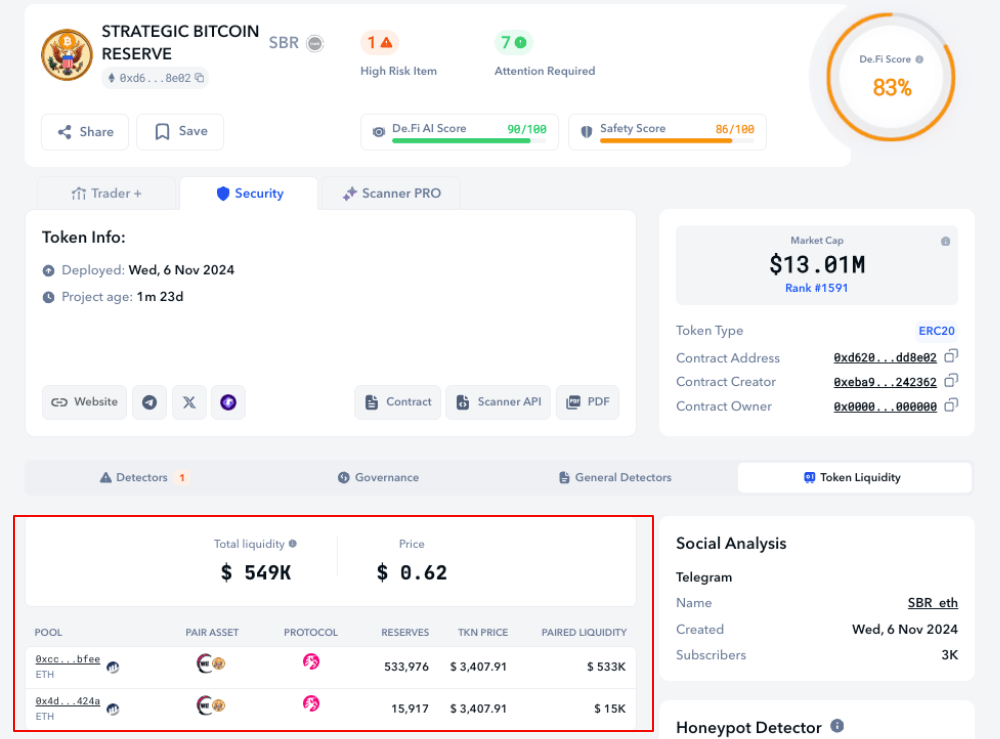
RFS Platform Insight 💬
Most protocol risk models still materially underestimate correlated liquidity withdrawal, especially during stablecoin stress events. This blind spot becomes systemic as institutional exposure scales.
❓ The RFS Lens: What Institutions Are Missing
Institutions are asking the wrong primary question.
❌ “Is this asset safe?”
✅ “How does liquidity behave when everyone exits at once?”
Safety in digital markets is not a static attribute—it is a dynamic property of market structure, redemption design, and behavioral feedback loops. Assets that appear robust in isolation can become fragile when liquidity pathways converge and stress propagates simultaneously across onchain and offchain systems.
📋 What Matters Most in 2026?
As institutional participation deepens, four priorities will define resilient engagement:
Liquidity density, not TVL — where liquidity sits matters more than how much exists.
Redemption speed, not reserve size — timing is the real stress variable.
Onchain transparency, not issuer assurances — verifiable data beats narratives.
Embedded supervision, not post-event audits — risk must be monitored continuously, not retroactively.

This is why RFS focuses on forward-looking risk intelligence, rather than backward-looking compliance artifacts.
📝 Risk Takeaways for Allocators & Regulators
Treat stablecoins as liquidity instruments, not cash equivalents.
Require scenario-based stress testing, not static reserve disclosures.
Demand real-time supervisory access for systemically relevant issuers and protocols.
Integrate DeFi risk scoring directly into treasury, collateral, custody, and liquidity decisions.

Risk that cannot be monitored in real time cannot be governed at scale.
🛠️ What We’re Building at RFS
In 2026, RFS is expanding its platform and research to meet institutional reality:
Stablecoin Liquidity Stress Modules
Protocol-Level Risk Scoring & Real-Time Alerts
Embedded Supervision Dashboards for regulators and institutions
Institutional-Grade Research Briefs for banks, pensions, and sovereign entities
If you’re a regulator, allocator, or financial institution navigating onchain exposure, this is the year risk intelligence becomes non-optional.
🙇🏾♀️ Camryn’s Corner - Tokenized Collateral Grows Up: Lessons from 2025’s First Real Stress Test
Welcome back to another edition of Camryn’s Corner, your weekly highlight reel of standout protocols, applications, and trends shaping the DeFi landscape. This week, I’m stepping back from the hype cycle to look at execution—specifically, how tokenized collateral performed in real market conditions over the course of 2025, and what that performance tells us about where institutional adoption is actually headed.
Tokenized collateral moved from concept to controlled deployment in 2025, but only in narrow, well-scoped use cases. The areas that scaled were pragmatic rather than experimental: faster settlement for short-duration instruments, margin efficiency in closed ecosystems, and operational improvements where legal ownership, custody, and redemption mechanics were clearly defined off-chain. Tokenized cash equivalents and government securities gained traction where transfer restrictions, identity layers, and auditability were embedded by design. In contrast, open-ended collateral reuse and cross-protocol composability largely stalled, not due to technical limitations, but because institutions were unwilling to introduce opaque liquidation paths or ungoverned rehypothecation risk into balance-sheet workflows.
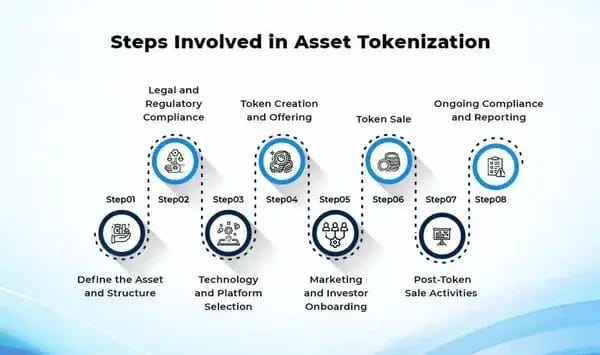
By Yellow.com
Where tokenized collateral failed to scale in 2025 was equally instructive. Structures that relied on assumed liquidity, discretionary redemptions, or loosely defined legal claims struggled to move beyond pilot stages. In stressed conditions, institutions prioritized certainty over programmability—favoring slower, auditable settlement over faster but legally ambiguous mechanisms. This reinforced a clear lesson: tokenization does not eliminate risk, it reshapes it. Without enforceable claims, credible custodial controls, and predictable unwind mechanics, tokenized collateral becomes a source of operational and reputational risk rather than efficiency.
The takeaway as we enter 2026 is that tokenized collateral is no longer an abstract innovation—it is a design discipline. The winners will not be the most composable systems, but the most governable ones. Institutions are signaling that scale will follow clarity: clear legal frameworks, conservative liquidity assumptions, and embedded controls that behave predictably under stress. Tokenization’s next phase won’t be defined by how fast assets move on-chain, but by how reliably they can be defended, unwound, and explained when markets turn.
👤 About RFS Consulting
RFS Consulting provides institutional-grade DeFi risk intelligence, regulatory analysis, and embedded supervision frameworks for:
Pension funds
Asset managers
Law firms
Regulators
Financial institutions
Our edge:
We don’t sell tokens.
We don’t manage assets.
We provide risk clarity.
Interested in licensing the RFS DeFi Risk Platform or receiving bespoke risk briefings?
📩 Contact: [email protected]
🫱🏽🫲🏿 Support RFS Risk Intelligence Weekly
If you enjoy our weekly research and want to support continued independent risk analysis, consider:

Gif by xbox on Giphy
☕️ Buy Me a Coffee — Fuel future newsletters!
💸 Tip in USDC: Ethereum 0x695B71a929A21F2A260f61aEd09872DA053Bcc42 — secured via Gnosis Safe
💳 Tip via Stripe — One-time or recurring support.
📢 Call to Action
Interested in joining the pilot or accessing our full whitepaper? — Email [email protected] (Subject: Pilot Enrollment Request)
💼 Custom engagements | Audit-aligned scoring | Institutional onboarding
🛜 Join Our Community — Let’s Get to 500 Subscribers!
Be part of the RFS DeFi Risk Intelligence Network — our goal is to build a vibrant global community of 500+ institutional readers, builders, and compliance professionals advancing responsible DeFi.
Don’t Forget to Follow and Engage with Us:
🌐 RFS Consulting Website: www.rfsconsultingglobal.com
🎥 RFS YouTube Page: @RFSConsultancy_DeFiAdvisory
🔗 RFS Consulting LinkedIn Page: @rfsconsultingglobal
🐦 X / Twitter: @RFSCryptoDeFi
🖇️ Stay Connected
For partnership or media inquiries: [email protected]
Subscribe to the RFS DeFi Risk Intelligence Weekly
Till next time,
RFS DeFi Risk Intelligence Weekly
🔓Disclaimer: This Weekly is strictly informational—not investment or legal advice. RFS Consulting emphasizes governance, model validation, and data integrity in its risk assessment framework.