- RFS Consulting Newsletter
- Posts
- RFS DeFi Risk Intelligence Weekly
RFS DeFi Risk Intelligence Weekly
December 27, 2025 | Institutional Risk. Regulatory Signals. Onchain Reality.

Camryn Odom & Robert Franklin III
December 27, 2025 • Estimated Reading Time: 5 minutes
In partnership with

Week of December 22nd - December 28th
Prepared by RFS Consulting LLC — Advancing Institutional DeFi Risk Intelligence
In Partnership with Gemach DAO

Welcome to Another Edition of RFS DeFi Risk Intelligence Weekly!
Your weekly breakdown of institutional digital asset risk, policy momentum, and real-time DeFi intelligence tailored for allocators, regulators, and enterprise leaders.
Here’s whats new this week:

🗞️ Enjoying RFS DeFi Risk Intelligence Weekly? Support the Research!
“Independent DeFi risk research takes time and resources. If you enjoy our insights, consider fueling the work with a small contribution below”
☕️ Buy Me a Coffee — Fuel future newsletters!
💸 Tip in USDC: Ethereum 0x695B71a929A21F2A260f61aEd09872DA053Bcc42 — secured via Gnosis Safe
💳 Tip via Stripe — One-time or recurring support.
📝 Executive Summary
As markets close out the year, digital asset liquidity remains broadly intact — but confidence is uneven. Prices across major crypto assets have stabilized following December’s volatility, yet institutional allocators are not re-risking aggressively. Instead, they are pausing, assessing, and recalibrating amid unresolved questions around stablecoin supervision, crypto custody standards, and token classification.
The most important signal this week is not price action.
It is governance.
Across regulators, rating agencies, and large allocators, a structural reframing is underway: stablecoins are no longer viewed primarily as crypto-native instruments, but as financial infrastructure. This shift is subtle but consequential. It brings stablecoins into the same conceptual category as payment rails, settlement assets, and short-duration funding instruments — and with that comes heightened scrutiny around liquidity resilience, redemption mechanics, and operational controls.
This reframing is accelerating institutional demand for liquidity-focused oversight, redemption stress analysis, and continuous risk monitoring. In short, the market is moving away from narrative risk and toward infrastructure risk — a transition that will define institutional DeFi engagement in 2026.
🏛️ Policy & Market Signal Spotlight: Stablecoins Move Toward Ratings
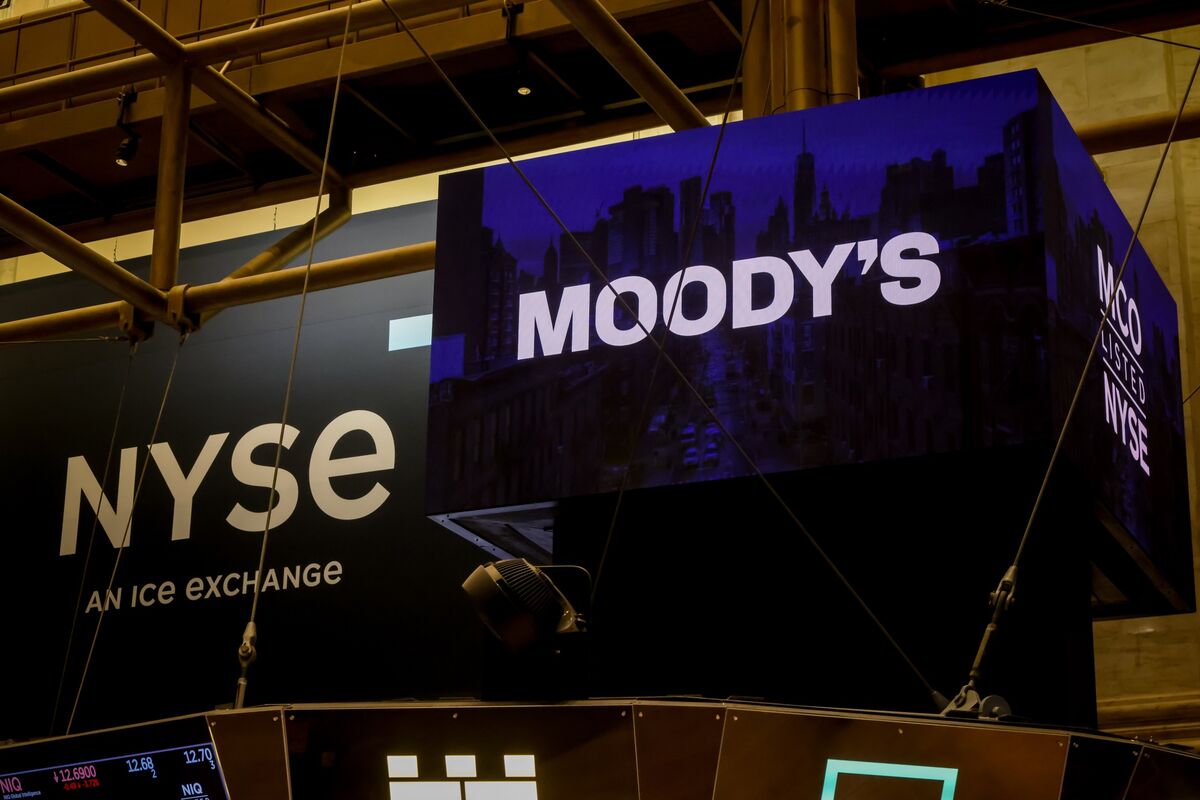
Last week, Bloomberg reported that Moody’s is developing a stablecoin ratings framework focused on liquidity risk, reserve quality, and redemption mechanics — a notable development in how traditional financial institutions are approaching onchain liabilities.
This marks a meaningful inflection point for the market:
Stablecoins are increasingly evaluated as payment and settlement instruments, not speculative crypto assets
Liquidity and redemption risk have overtaken price volatility as the primary supervisory concern
Traditional credit-style frameworks are being adapted to assess onchain liabilities
Read More from the 🔗Bloomberg Article Linked Below:
The direction of travel is clear. Digital assets — particularly stablecoins — are being pulled toward the prudential logic of money markets and short-term funding vehicles, even as they retain programmable, onchain execution. This convergence reflects a broader institutional reality: once an asset becomes systemic to settlement and liquidity, it must be governed like infrastructure.
For the DeFi ecosystem, this does not signal a retreat from innovation. It signals maturation — and a rising bar for transparency, governance, and risk discipline.

By Crypto Economy
🎓 The RFS Lens: What This Signals for Institutions
From the RFS perspective, the move toward stablecoin ratings is an important step — but it is not sufficient on its own. The real challenge lies in how institutions interpret and operationalize this shift.
1. Liquidity Is Now the Dominant Risk Dimension
The emphasis on redemption mechanics validates what we see consistently across institutional engagements: liquidity resilience, not price volatility, is now the primary risk vector.
Stablecoins increasingly function as settlement infrastructure. Their failure modes resemble payment disruption and funding stress — not asset drawdowns. This distinction matters enormously for risk classification, internal controls, and regulatory reporting.
What this means for readers:
If stablecoins are still categorized internally as “crypto exposure,” risk frameworks are already misaligned with how regulators and markets now view them.
2. Ratings Will Lag Real-Time Risk
Ratings frameworks are, by design, periodic and backward-looking. They assess reserve composition, governance disclosures, and stated policies — but they cannot capture real-time stress propagation across DeFi.
From the RFS lens:
The most acute risks emerge between reporting periods
Stress transmits through collateral reuse, protocol dependencies, and composability
Liquidity often appears abundant right up until the moment it is not
What this means for readers:
Ratings may become table stakes. But continuous, onchain-aware risk intelligence will define true institutional readiness.
3. Stablecoin Risk Is a Network Problem, Not an Issuer Problem
A persistent institutional blind spot is evaluating stablecoins in isolation.
In practice, stablecoins:
Anchor DeFi lending and derivatives markets
Serve as collateral across multiple protocol layers
Act as the unit of account for onchain treasuries and payments
From an RFS standpoint, the correct question is not “Is this stablecoin safe?”
It is:
“What breaks if this stablecoin is stressed?”
What this means for readers:
Stablecoin exposure must be assessed as systemic, networked risk — not issuer-level risk.
📊 Market Structure: What the Data Continues to Show
Market structure data continues to reinforce several structural realities:
Liquidity remains highly concentrated among a small number of issuers and venues
Stablecoins increasingly act as collateral multipliers, amplifying downstream protocol risk
Onchain transparency improves visibility — but not interpretation or governance context
This reinforces a core RFS principle:
Onchain finance is observable, but not inherently interpretable.
RFS Risk Scoreboard (Institutional View)
Asset / Category | Risk Score* | Primary Risk Drivers |
|---|---|---|
Bitcoin (BTC) | Low–Moderate | Custody, governance concentration |
Ethereum (ETC) | Moderate | MEV exposure, protocol complexity |
Major Stablecoins | Moderate–High | Liquidity backing, redemption design |
DeFi Lending Protocols | High | Liquidity mismatch, oracle risk |
Governance Tokens | High | Regulatory classification, volatility |
*RFS Risk Scores synthesize liquidity resilience, governance structure, smart-contract exposure, regulatory alignment, and market-structure risk
RFS Institutional Takeaway 💬
The next phase of digital asset adoption will not be driven by price appreciation. It will be driven by risk translation.
Institutions that succeed in 2026 will:
Treat stablecoins and DeFi as financial infrastructure
Implement continuous, onchain-aware risk monitoring
Align governance, liquidity, and compliance into a unified framework
This is precisely where RFS Consulting is focused — converting onchain transparency into decision-useful, institutional-grade risk intelligence.
The Briefing Leaders Rely On.

In a landscape flooded with hype and surface-level reporting, The Daily Upside delivers what business leaders actually need: clear, concise, and actionable intelligence on markets, strategy, and business innovation.
Founded by former bankers and veteran business journalists, it's built for decision-makers — not spectators. From macroeconomic shifts to sector-specific trends, The Daily Upside helps executives stay ahead of what’s shaping their industries.
That’s why over 1 million readers, including C-suite executives and senior decision-makers, start their day with it.
No noise. No jargon. Just business insight that drives results.
🙇🏾♀️ Camryn’s Corner - Stablecoins as Market Infrastructure: Year-End Liquidity Stress Test
Welcome back to another edition of Camryn’s Corner, your weekly highlight reel of standout protocols, applications, and trends shaping the DeFi landscape.
This week, the spotlight turns to stablecoins, not as trading tools or yield instruments, but as critical market infrastructure heading into year-end. As balance sheets tighten, liquidity windows narrow, and institutional risk committees go into review mode, stablecoins are quietly facing one of their most meaningful real-world tests: how they perform under coordinated redemption pressure.

By BitGo
Year-end periods historically expose where liquidity truly resides, and stablecoins are no exception. While aggregate supply may appear stable, underlying dynamics tell a more nuanced story — shifts between issuers, changes in redemption velocity, and sensitivity to confidence all become more pronounced in December. The question institutions are asking is no longer whether a stablecoin holds its peg in calm conditions, but how quickly and cleanly reserves can be mobilized when liquidity demand spikes. Onchain data often reflects these stresses before headlines do, revealing which stablecoins function as reliable settlement rails and which depend more heavily on trust, timing, or offchain assurances.
The takeaway for DeFi participants and institutional allocators alike is simple but consequential: stablecoins are being evaluated as short-duration liquidity instruments, not cash equivalents. Year-end stress does not require a crisis to surface structural weaknesses — it only requires coordination, scale, and urgency. As stablecoins continue to underpin trading, payments, and tokenized markets, their role as systemic infrastructure is no longer theoretical. How they behave during moments like this will shape allocation decisions, regulatory frameworks, and protocol design well into 2026.
👤 About RFS Consulting
RFS Consulting provides institutional-grade DeFi risk intelligence, regulatory analysis, and embedded supervision frameworks for:
Pension funds
Asset managers
Law firms
Regulators
Financial institutions
Our edge:
We don’t sell tokens.
We don’t manage assets.
We provide risk clarity.
Interested in licensing the RFS DeFi Risk Platform or receiving bespoke risk briefings?
📩 Contact: [email protected]
🫱🏽🫲🏿 Support RFS Risk Intelligence Weekly
If you enjoy our weekly research and want to support continued independent risk analysis, consider:

Gif by xbox on Giphy
☕️ Buy Me a Coffee — Fuel future newsletters!
💸 Tip in USDC: Ethereum 0x695B71a929A21F2A260f61aEd09872DA053Bcc42 — secured via Gnosis Safe
💳 Tip via Stripe — One-time or recurring support.
📢 Call to Action
Interested in joining the pilot or accessing our full whitepaper? — Email [email protected] (Subject: Pilot Enrollment Request)
💼 Custom engagements | Audit-aligned scoring | Institutional onboarding
🛜 Join Our Community — Let’s Get to 500 Subscribers!
Be part of the RFS DeFi Risk Intelligence Network — our goal is to build a vibrant global community of 500+ institutional readers, builders, and compliance professionals advancing responsible DeFi.
Don’t Forget to Follow and Engage with Us:
🌐 RFS Consulting Website: www.rfsconsultingglobal.com
🎥 RFS YouTube Page: @RFSConsultancy_DeFiAdvisory
🔗 RFS Consulting LinkedIn Page: @rfsconsultingglobal
🐦 X / Twitter: @RFSCryptoDeFi
🖇️ Stay Connected
For partnership or media inquiries: [email protected]
Subscribe to the RFS DeFi Risk Intelligence Weekly
Till next time,
RFS DeFi Risk Intelligence Weekly
🔓Disclaimer: This Weekly is strictly informational—not investment or legal advice. RFS Consulting emphasizes governance, model validation, and data integrity in its risk assessment framework.