- RFS Consulting Newsletter
- Posts
- RFS DeFi Risk Intelligence Weekly
RFS DeFi Risk Intelligence Weekly
March 16th, 2026 | Institutional Risk, Stablecoins, Liquidity & Onchain Signals

Camryn Odom & Robert Franklin III
March 16, 2026 • Estimated Reading Time: 8 minutes
Week of March 9th – 16th, 2026
Prepared by RFS Consulting LLC — Advancing Institutional DeFi Risk Intelligence
Robert M. Franklin III | Managing Partner
In Partnership with Gemach DAO

Welcome to Another Edition of RFS DeFi Risk Intelligence Weekly!
Your weekly breakdown of institutional digital asset risk, policy momentum, and real-time DeFi intelligence tailored for allocators, regulators, and enterprise leaders.
Here’s whats new this week:

Gif by universalpictures on Giphy
🗞️ Enjoying RFS DeFi Risk Intelligence Weekly? Support the Research!
“Independent DeFi risk research takes time and resources. If you enjoy our insights, consider fueling the work with a small contribution below”
☕️ Buy Me a Coffee — Fuel future newsletters!
💸 Tip in USDC: Ethereum 0x695B71a929A21F2A260f61aEd09872DA053Bcc42 — secured via Gnosis Safe
💳 Tip via Stripe — One-time or recurring support.
📸 Executive Summary
Digital asset markets continue to demonstrate measured resilience amid a complex macroeconomic environment, with institutional sentiment remaining constructive but cautious. While traditional markets continue to navigate interest rate uncertainty and evolving global liquidity conditions, digital asset markets have largely maintained stability. Major assets are trading within relatively controlled ranges, suggesting that market participants are shifting from speculative positioning toward more deliberate, risk-managed allocation strategies.
Bitcoin continues to consolidate following earlier volatility tied to ETF flow fluctuations and macro policy speculation. Meanwhile, activity across other major networks—including Ethereum and Solana—remains healthy. Network utilization metrics show steady user engagement and consistent developer activity, while decentralized finance (DeFi) total value locked (TVL) has begun to show modest but steady growth after earlier contraction cycles. These signals suggest that capital is returning selectively, favoring ecosystems with stronger infrastructure, governance, and institutional accessibility.
Regulatory momentum is also beginning to reshape the institutional landscape. Policymakers are accelerating discussions around tokenized securities, digital asset custody frameworks, and stablecoin transparency standards, which could significantly influence how traditional financial institutions integrate blockchain-based infrastructure. For institutions evaluating digital asset exposure, the environment remains broadly constructive—but success will increasingly depend on structured risk frameworks, governance oversight, and disciplined capital allocation strategies.
Key Themes This Week
• Stabilizing ETF flows in Bitcoin
• Institutional positioning in Ethereum staking and Layer-2 infrastructure
• Continued growth in Solana ecosystem activity
• Expanding regulatory clarity around tokenized securities
• Increased scrutiny of stablecoin liquidity transparency
For institutional investors, the current market environment reflects gradual structural maturation rather than speculative acceleration. As capital becomes more selective, risk management capabilities will become a critical differentiator between opportunistic participation and sustainable institutional engagement.
📈 Market Overview
Bitcoin continues to trade within a consolidation range following several weeks of heightened volatility earlier in the year. Institutional flows appear to be stabilizing, with ETF allocations remaining net positive but more measured, indicating that the initial surge of post-approval demand has transitioned into a more normalized allocation pattern. At the same time, derivatives markets show relatively balanced positioning, with funding rates remaining close to neutral and leverage levels remaining within historically typical ranges.

By Mulberry Wealth Securities
Another notable development is the continued increase in long-term holder supply, a signal often interpreted as a sign of maturing market structure. As more Bitcoin migrates into long-term custody environments—including institutional wallets, asset managers, and treasury allocations—circulating liquidity becomes increasingly concentrated among strategic holders rather than short-term traders. This dynamic has historically contributed to reduced volatility during consolidation phases, though it can also amplify directional moves when macro catalysts emerge.
For institutional investors, Bitcoin remains the primary digital asset allocation vehicle, often functioning as the entry point into broader crypto exposure. However, investors are increasingly looking beyond simple price appreciation toward risk-adjusted yield opportunities and infrastructure exposure within the broader digital asset ecosystem.
Ethereum continues to occupy a central role in the digital asset ecosystem as both a programmable financial infrastructure layer and the foundation for most decentralized finance activity. Institutional interest remains strong, driven by three primary structural trends: staking yield opportunities, rapid growth of Layer-2 scaling networks, and increasing experimentation with tokenized financial instruments built on Ethereum-compatible infrastructure.
Staking continues to attract attention from institutional allocators seeking yield-generating exposure within the digital asset ecosystem. The combination of staking rewards and network participation incentives creates an economic model that increasingly resembles fixed-income infrastructure, albeit with unique governance and protocol-level risks. At the same time, the expansion of Layer-2 networks is improving transaction efficiency and lowering operational costs, which could further accelerate institutional adoption of on-chain financial applications.
Despite these strengths, several risk considerations remain relevant. Smart contract vulnerabilities remain a persistent concern across DeFi applications built on Ethereum, and validator concentration dynamics continue to raise questions about long-term decentralization. Additionally, regulatory classification frameworks surrounding staking services and tokenized assets could shape institutional participation over the coming years.
For institutional investors, Ethereum remains the core infrastructure layer for tokenized finance, but exposure must be accompanied by robust monitoring of governance dynamics, validator participation, and smart contract risk across the broader ecosystem.
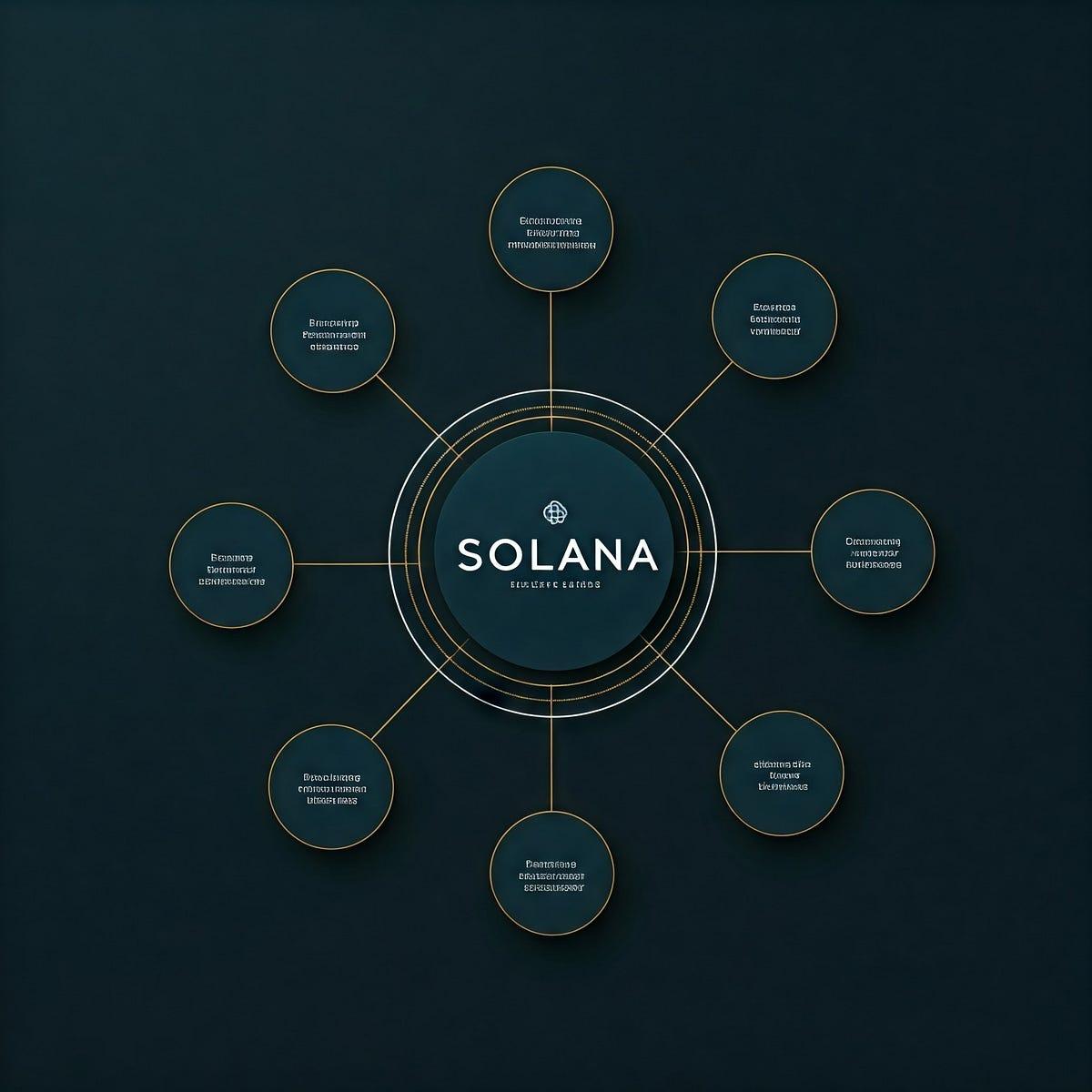
Solana continues to experience strong ecosystem activity, driven largely by growth in decentralized finance applications, payment infrastructure initiatives, and consumer-focused crypto products. The network’s high transaction throughput and relatively low transaction costs have allowed developers to experiment with new categories of blockchain applications, including high-frequency trading platforms, payment rails, and consumer engagement tools.
User activity across the Solana ecosystem has remained robust, with transaction volumes and developer participation continuing to grow relative to several competing networks. This momentum has positioned Solana as a high-growth infrastructure layer within the digital asset ecosystem, particularly for applications requiring fast settlement and high scalability.
By Medium.com
Nevertheless, institutional investors remain attentive to several structural considerations. The network’s historical reliability challenges have prompted ongoing discussions about infrastructure resilience, while validator decentralization metrics and liquidity depth across DeFi protocols remain areas of active monitoring.
For institutional participants, Solana represents significant growth potential, but capital allocation decisions must incorporate careful evaluation of network resilience, governance architecture, and ecosystem maturity.
🌅 DeFi Risk Landscape
As institutional capital continues to explore decentralized finance markets, several structural risk vectors remain particularly important for professional investors evaluating protocol exposure. Unlike traditional financial markets, where infrastructure is tightly regulated and operational standards are well established, DeFi systems rely heavily on open-source code, decentralized governance, and complex protocol interactions.
One of the most persistent risk vectors remains smart contract vulnerability exposure. Because DeFi protocols rely on automated execution logic embedded in blockchain code, any flaw in the underlying contract can create significant financial risk. Historically, some of the largest losses in the DeFi ecosystem have resulted from code exploits rather than market volatility. Mitigation strategies increasingly include independent contract audits, formal verification methods, and continuous monitoring frameworks designed to detect abnormal protocol behavior in real time.
Stablecoin liquidity risk represents another critical area of institutional focus. Stablecoins function as the primary settlement and collateral layer for the DeFi ecosystem, meaning that liquidity disruptions or redemption failures could propagate rapidly across interconnected protocols. Institutional investors increasingly evaluate stablecoin issuers according to criteria similar to traditional financial liquidity frameworks, including reserve transparency, redemption mechanics, and stress-scenario liquidity performance.
Finally, governance risk continues to shape how institutional investors evaluate protocol exposure. Governance tokens increasingly determine key operational decisions—including treasury management, protocol upgrades, and risk parameter adjustments. Concentrated voting power among a small number of participants can create governance fragility, particularly in situations where protocol decisions influence large pools of locked capital. As a result, institutional allocators must evaluate not only technical infrastructure, but also the governance dynamics and voting concentration patterns that ultimately shape protocol decision-making.
Go from AI overwhelmed to AI savvy professional

AI will eliminate 300 million jobs in the next 5 years.
Yours doesn't have to be one of them.
Here's how to future-proof your career:
Join the Superhuman AI newsletter - read by 1M+ professionals
Learn AI skills in 3 mins a day
Become the AI expert on your team
📈 RFS Risk Scoreboard
Protocol Risk Indicators
Asset / Protocol | Category | RFS Risk Score | Risk Level |
|---|---|---|---|
Bitcoin | Layer 1 | 88 / 100 | Low |
Ethereum | Layer 1 | 82 / 100 | Low-Moderate |
Solana | Layer 1 | 76 / 100 | Moderate |
Aave | DeFi Lending | 79 / 100 | Moderate |
Uniswap | DEX | 78 / 100 | Moderate |
MakerDAO | Stablecoin Protocol | 75 / 100 | Moderate |
USDC | Stablecoin | 84 / 100 | Low |
USDT | Stablecoin | 73 / 100 | Moderate |
Interpretation 💬
RFS Risk Scores evaluate digital asset protocols and infrastructure across five institutional risk dimensions:
• Liquidity resilience
• Governance structure
• Smart contract security
• Market concentration
• Regulatory exposure
Scores above 80 indicate relatively strong institutional risk profiles, while scores below 70 suggest elevated risk dynamics that may require additional analysis or mitigation strategies.
From an institutional perspective, the scoreboard illustrates an increasingly tiered risk landscape across digital asset markets. Core infrastructure assets such as Bitcoin and Ethereum maintain relatively strong institutional risk profiles, while certain DeFi protocols and stablecoins present more complex operational and governance considerations.
📝 Regulatory & Institutional Developments
Regulatory frameworks for digital assets continue to evolve rapidly as policymakers attempt to balance innovation with systemic stability. One of the most important developments in this space involves the emerging regulatory approach to tokenized securities and blockchain-based financial instruments.
Recent policy discussions suggest that regulators are exploring models that incorporate privacy-preserving identity verification systems, transaction monitoring capabilities, and programmable compliance mechanisms embedded directly into blockchain infrastructure. These approaches could allow regulators to maintain supervisory visibility while still enabling decentralized financial architectures to operate efficiently.

By Frontiersin
At the same time, traditional financial institutions are accelerating their exploration of blockchain-based services. Major banks, asset managers, and financial infrastructure providers are increasingly investing in capabilities related to digital asset custody, tokenized securities issuance, and blockchain settlement networks. These initiatives suggest that the long-term trajectory of financial markets may involve hybrid financial architectures, combining elements of traditional finance with blockchain-based infrastructure.
For institutions evaluating digital asset markets, regulatory clarity is increasingly becoming a catalyst rather than a constraint, helping to establish operational standards that enable broader participation from traditional financial actors.
✍🏾 Strategic Insight from RFS Consulting
The most significant barriers to institutional adoption of digital assets are no longer purely technological. Blockchain infrastructure has matured substantially over the past decade, and many of the core operational capabilities required for institutional participation now exist.
Instead, the primary challenges facing institutional investors involve governance frameworks, regulatory clarity, and risk management infrastructure. Organizations must develop structured processes for evaluating protocol exposure, monitoring liquidity dynamics, and managing operational risks associated with decentralized financial systems.
Institutions that invest early in risk intelligence capabilities and governance frameworks will be best positioned to participate effectively in the evolving digital asset economy. As decentralized finance continues to mature, the institutions that succeed will not necessarily be those that move fastest—but those that build robust, adaptable risk management infrastructure capable of navigating an increasingly complex market landscape.
RFS Consulting’s DeFi Risk Management Platform is designed to support this transition by providing institutions, regulators, and asset managers with structured frameworks for evaluating digital asset risk across protocols, stablecoins, and tokenized financial infrastructure.
🙇🏾♀️ Camryn’s Corner - “From DAO Wallets to Digital Asset Treasuries”
Welcome back to another edition of Camryn’s Corner, your weekly highlight reel of standout protocols, structural shifts, and emerging trends shaping the future of decentralized finance.
This week’s focus is a development that is quietly transforming how crypto-native organizations operate: the rise of on-chain treasury management. As DeFi protocols mature and DAO ecosystems accumulate billions in digital assets, the conversation is shifting from simply acquiring capital to managing it responsibly. Increasingly, protocols are adopting structured treasury strategies that resemble institutional asset management frameworks—complete with diversification mandates, liquidity buffers, and formal risk oversight.

By WeForum
In earlier phases of DeFi, treasury decisions were often reactive and governance-driven, relying heavily on community proposals and ad hoc asset allocations. Today, that model is evolving into something far more disciplined. A new generation of tools and frameworks is emerging that enables protocols to track liquidity positions, allocate reserves across stablecoins and yield strategies, and monitor risk exposure in real time. Treasury committees and governance participants are beginning to think more like institutional portfolio managers—balancing growth, liquidity, and risk across multiple assets while maintaining sufficient reserves to support protocol operations during periods of market stress.
The broader implication is that treasury management is becoming one of the defining operational competencies of mature DeFi protocols. In a market where token incentives and liquidity programs can change quickly, the protocols that endure will be those that treat their treasuries as strategic financial infrastructure rather than passive token reserves. As institutional capital continues to evaluate DeFi participation, disciplined treasury governance may become one of the strongest signals of protocol resilience. In the next phase of DeFi’s evolution, the difference between experimentation and sustainability may come down to how well a protocol manages its balance sheet.
👤 About RFS Consulting
RFS Consulting specializes in institutional risk management for digital assets, decentralized finance, and tokenized financial infrastructure. The firm works with institutional investors, regulators, financial institutions, and digital asset infrastructure providers to design governance, compliance, and embedded supervision frameworks for the evolving blockchain economy.
Through its research, advisory services, and risk analytics platform, RFS Consulting provides structured insights into the complex operational and regulatory dynamics shaping digital asset markets.
💬 Engage with RFS Consulting
RFS Consulting works with regulators, sovereigns, pensions, banks, and institutional allocators on risk intelligence, embedded supervision, and digital asset governance.
If your organization is moving from exploration to execution, now is the time to engage.
📩 Contact: [email protected]
🫱🏽🫲🏿 Support RFS Risk Intelligence Weekly
If you enjoy our weekly research and want to support continued independent risk analysis, consider:

Gif by xbox on Giphy
☕️ Buy Me a Coffee — Fuel future newsletters!
💸 Tip in USDC: Ethereum 0x695B71a929A21F2A260f61aEd09872DA053Bcc42 — secured via Gnosis Safe
💳 Tip via Stripe — One-time or recurring support.
📢 Call to Action
Interested in joining the pilot or accessing our full whitepaper? — Email [email protected] (Subject: Pilot Enrollment Request)
💼 Custom engagements | Audit-aligned scoring | Institutional onboarding
🛜 Join Our Community — Let’s Get to 500 Subscribers!
Be part of the RFS DeFi Risk Intelligence Network — our goal is to build a vibrant global community of 500+ institutional readers, builders, and compliance professionals advancing responsible DeFi.
Don’t Forget to Follow and Engage with Us:
🌐 RFS Consulting Website: www.rfsconsultingglobal.com
🎥 RFS YouTube Page: @RFSConsultancy_DeFiAdvisory
🔗 RFS Consulting LinkedIn Page: @rfsconsultingglobal
🐦 X / Twitter: @RFSCryptoDeFi
🖇️ Stay Connected
For partnership or media inquiries: [email protected]
Subscribe to the RFS DeFi Risk Intelligence Weekly
Till next time,
RFS DeFi Risk Intelligence Weekly
Institutional DeFi Risk Intelligence | Embedded Supervision | Stablecoin Resilience
🔓Disclaimer: This weekly newsletter is strictly informational—not investment or legal advice. RFS Consulting emphasizes governance, model validation, and data integrity in its risk assessment framework.